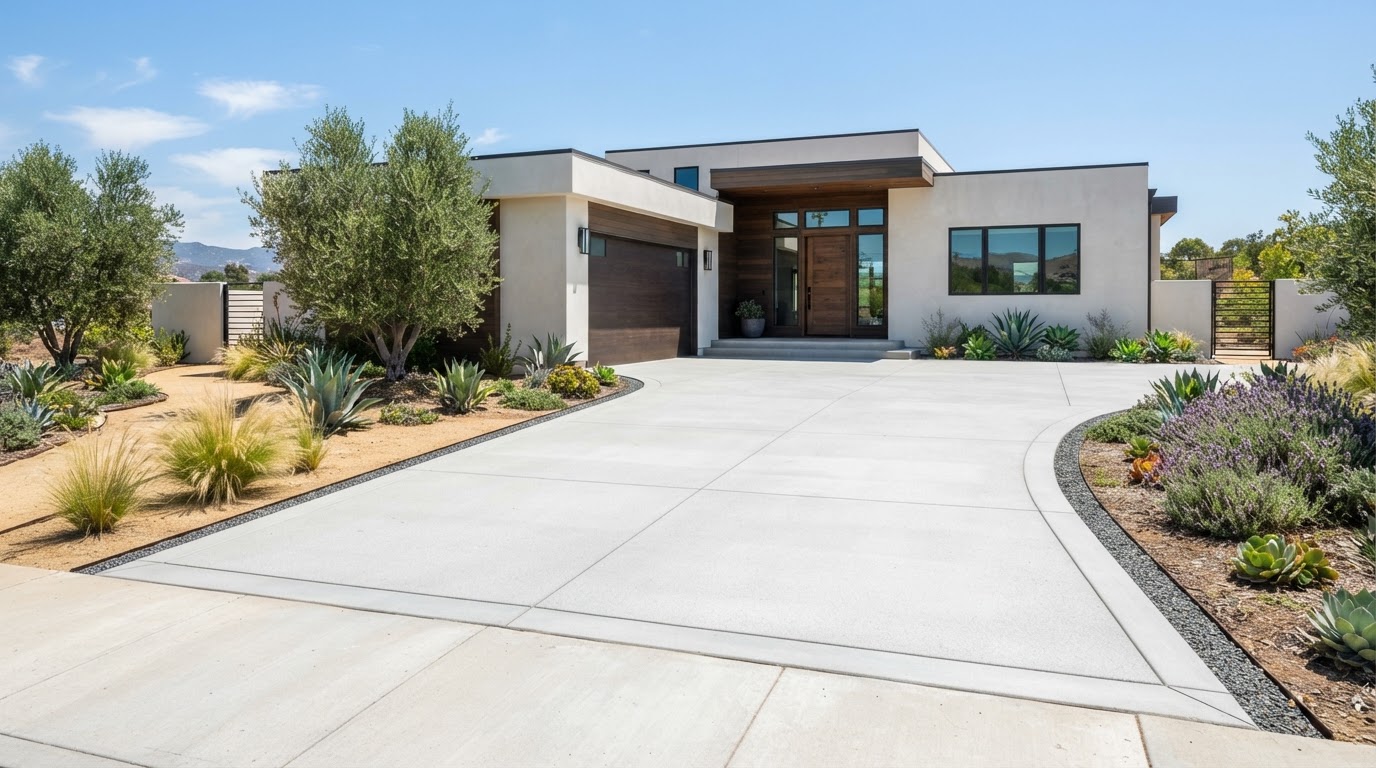
A new concrete driveway is one of the most practical improvements a homeowner can make — but the cost depends on far more than the size of the pour. In Santa Clara County, several factors shape the final price: the square footage, whether an existing driveway has to be removed, the base preparation, reinforcement, and the finish you choose.
This guide breaks down what drives a concrete driveway installation so you can plan a realistic budget before requesting an estimate.
What Affects Concrete Driveway Cost?
Driveway pricing is built from a handful of core variables. Understanding each one helps explain why two driveways of similar size can carry different prices.
Size and layout
The most obvious factor is square footage — a longer or wider driveway simply uses more material and labor. But layout matters too. A straight, rectangular driveway is the most efficient to form and pour, while curved, angled, or multi-section layouts add forming time and complexity.
New installation vs. replacement
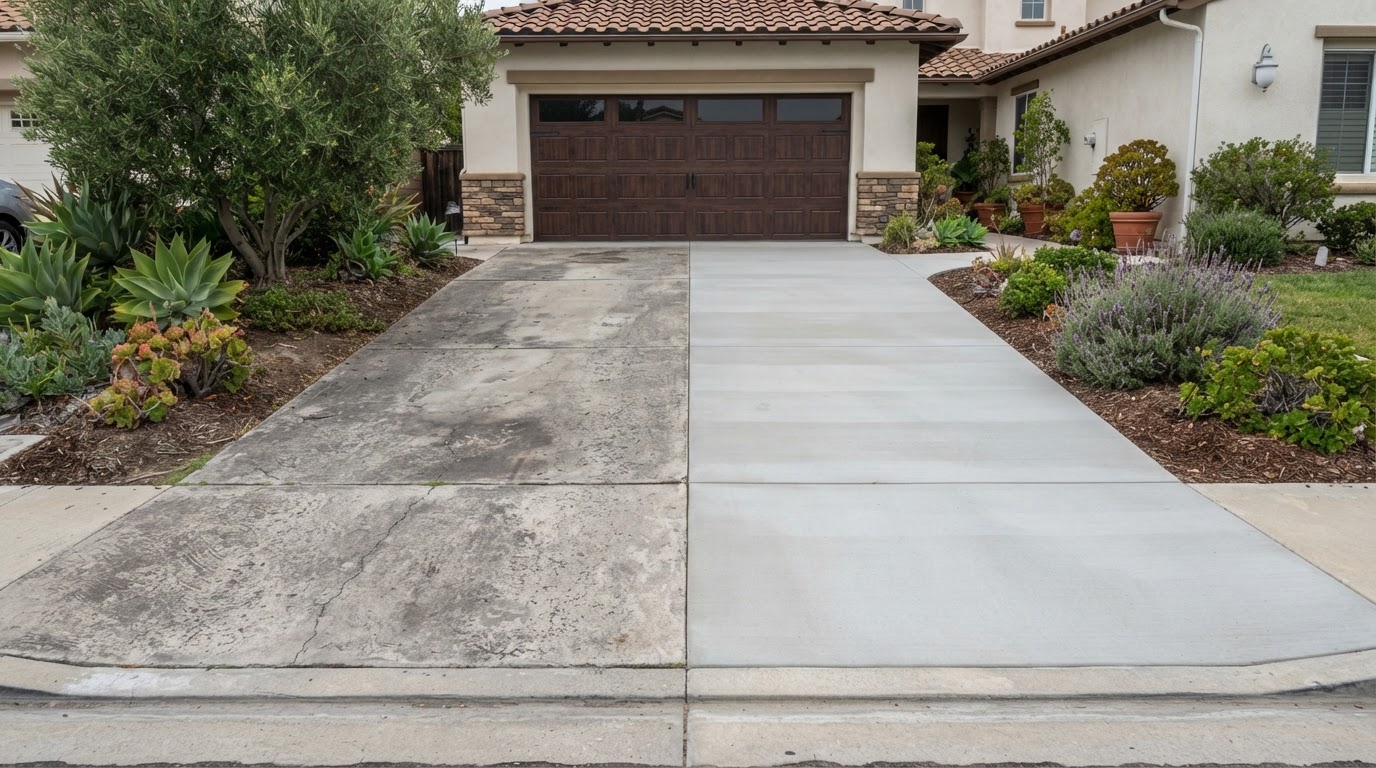
Pouring on a cleared lot is generally less expensive than replacing an existing driveway. With a replacement, the old concrete has to be broken out, hauled away, and the base re-prepared — and that demolition work is a real cost. The upside is that concrete removal and replacement lets you fix the underlying base and re-plan the layout at the same time.
Base preparation and drainage
The base under your driveway is what keeps it from settling and cracking early. A properly compacted subgrade and good drainage planning are essential to long-term performance — and they're part of a driveway done right, not optional add-ons.
Finish and reinforcement
A standard broom finish is the most economical and gives good traction. Smoother trowel finishes and decorative options like stamped concrete add to the price because of the patterns, color, and sealing involved. Reinforcement with rebar or mesh may be recommended depending on the driveway's use and soil.
New Driveway vs. Replacement Cost
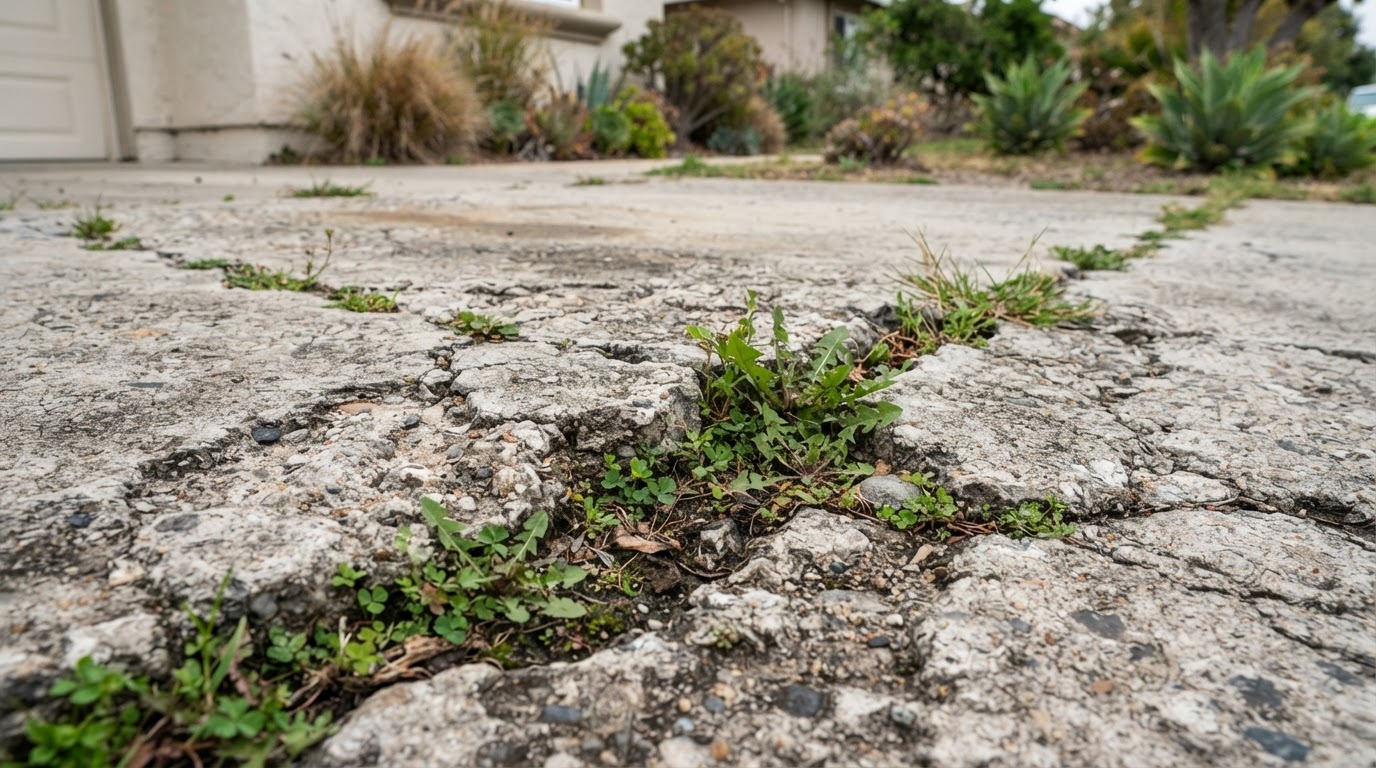
If you're starting from bare ground, the price reflects forming, base prep, concrete, and finishing. If you're replacing an old surface, add the cost of demolition and disposal. That said, a worn-out driveway is rarely worth keeping — extensive cracking and settling usually mean the base has failed, and patching over it just delays the inevitable.
Not sure whether your driveway can be saved? Our guide on signs you need a new concrete driveway walks through the warning signs.
How to Plan a Driveway Budget
- Measure the rough area (length × width) to get a sense of square footage.
- Note whether you're replacing an existing driveway or pouring new.
- Decide whether you want a standard broom finish or a decorative option.
- Think about the layout — straight runs cost less than curves and angles.
- Request a free, itemized estimate so the price reflects your actual property.
Rather than relying on a generic per-square-foot number, the most accurate way to budget is to get an estimate based on your specific driveway. and Vista Bay Concrete will review your property and planned scope.
How Long Will the Investment Last?
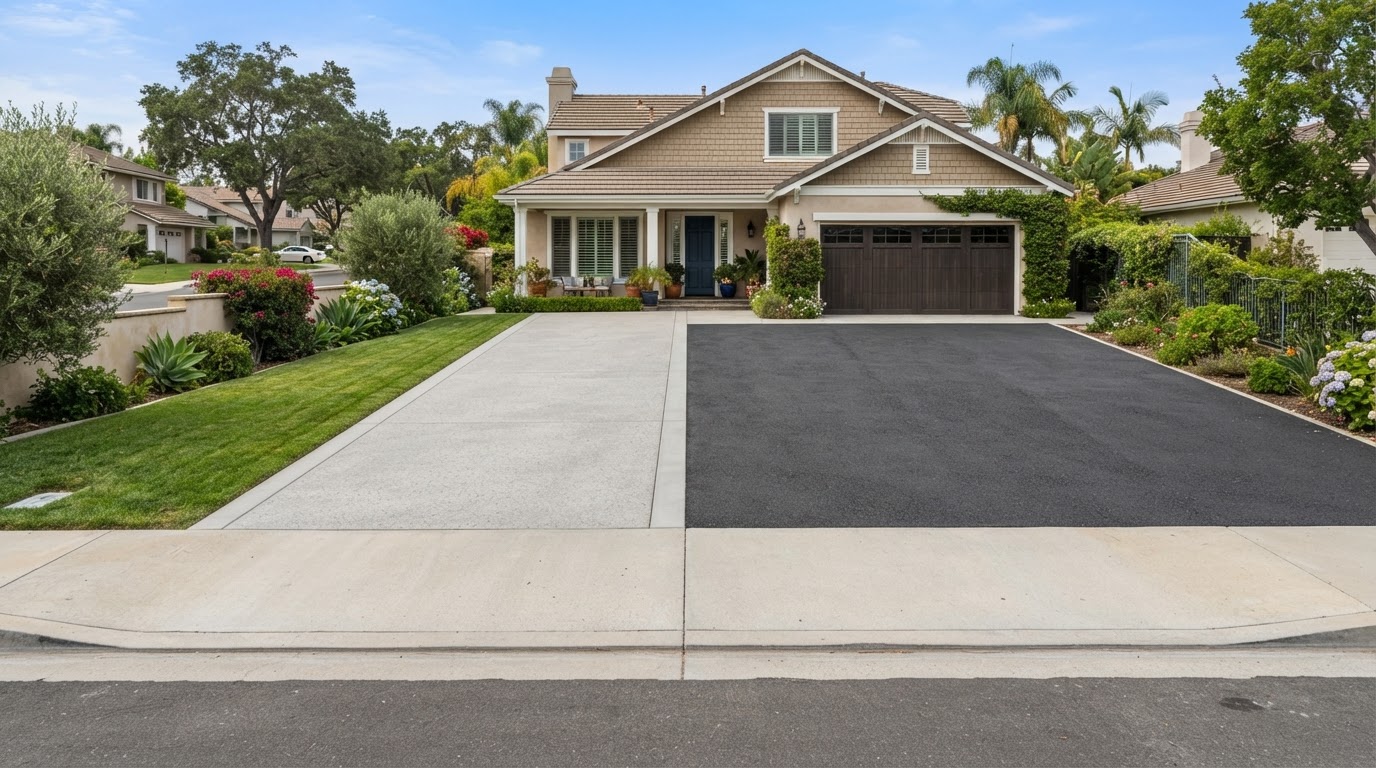
Cost should be weighed against lifespan. A driveway installed on a properly prepared base can serve a home for decades, which makes the per-year cost far more favorable than a cheaper surface that needs frequent repair. See how long a concrete driveway lasts and our concrete vs. asphalt comparison for more.