A concrete driveway is built to serve a home for a long time — but "how long" is not a single number. Lifespan depends on the base preparation, drainage, climate, traffic, and how well the surface is maintained. The good news is that most of the factors that determine longevity are decided during installation, not afterward.
This guide covers what you can realistically expect from a concrete driveway and how to keep it performing for as long as possible.
How Long Does a Concrete Driveway Last?
A driveway installed on a properly prepared, compacted base and finished well can serve a home for decades. Exact lifespan varies because no two properties, soils, or usage patterns are identical. What matters is that the conditions that lead to early failure are largely avoidable with good preparation.
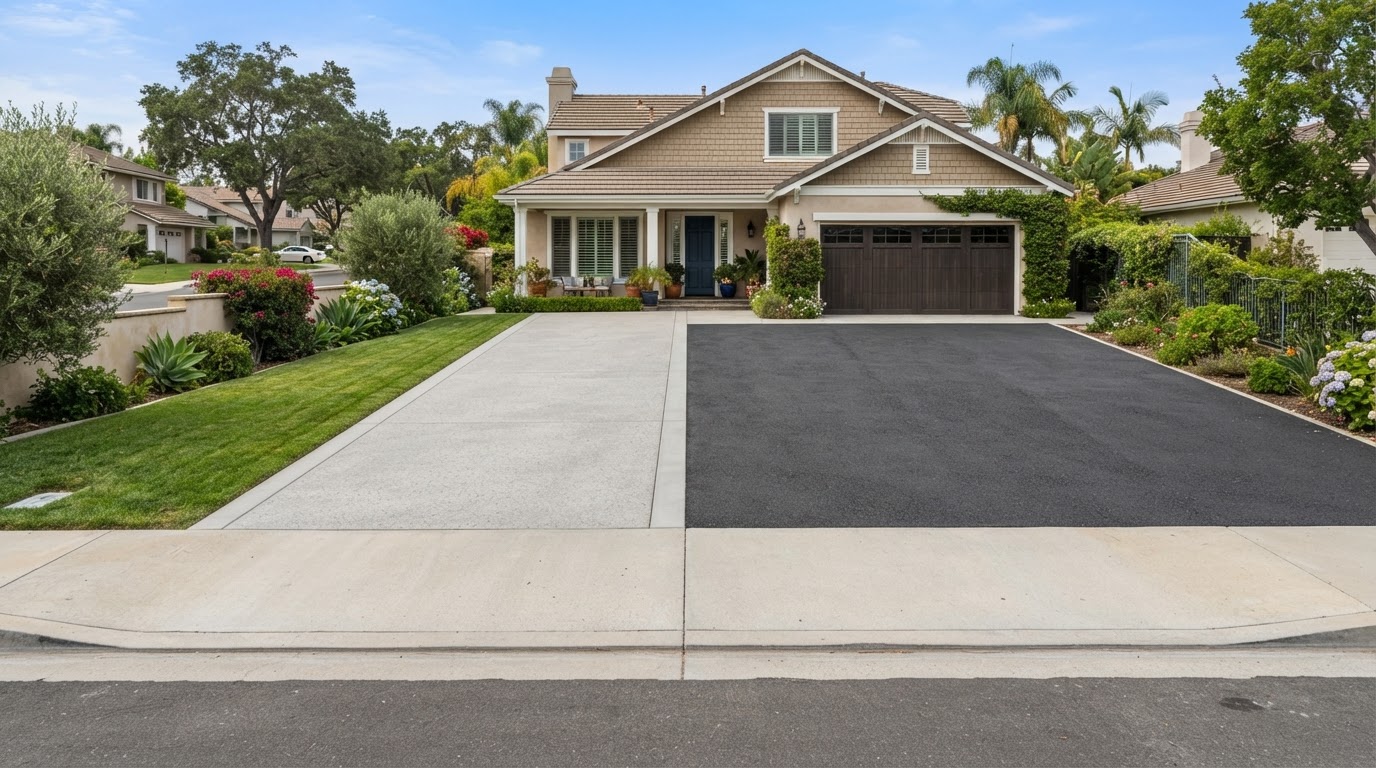
If you're weighing your options, our concrete vs. asphalt comparison shows how the two materials differ in durability and upkeep.
What Shortens a Driveway's Life?
Poor base preparation
The base is everything. If the subgrade isn't properly compacted or graded, the slab can move, settle unevenly, and crack far sooner than it should. This is the single biggest factor in premature failure — and it's why preparation is a core part of every project.
Inadequate drainage
Water that pools under or against a driveway undermines the base over time. Proper grading directs water away from the slab and the home so the ground beneath stays stable.
Heavy loads and impact
Driveways are built for regular vehicle traffic. Consistently heavy loads or concentrated point loads can stress the surface. Reinforcement is matched to how the driveway will actually be used.
Climate and soil
Santa Clara County's clay-heavy soils and dry-then-wet cycles put particular demands on a driveway. With more than 20 years of industry experience, Vista Bay Concrete prepares each project with local conditions in mind.
How to Extend Driveway Lifespan
- Start with a properly compacted, well-graded base.
- Plan drainage so water moves away from the slab and the home.
- Match reinforcement to the expected vehicle use.
- Seal the surface periodically to protect against moisture and staining.
- Address small cracks early so they don't spread.
No surface lasts forever, and some cracking can occur over time as concrete responds to ground movement. The goal of good preparation is to keep that cracking minor and infrequent rather than widespread.
Repair or Replace?
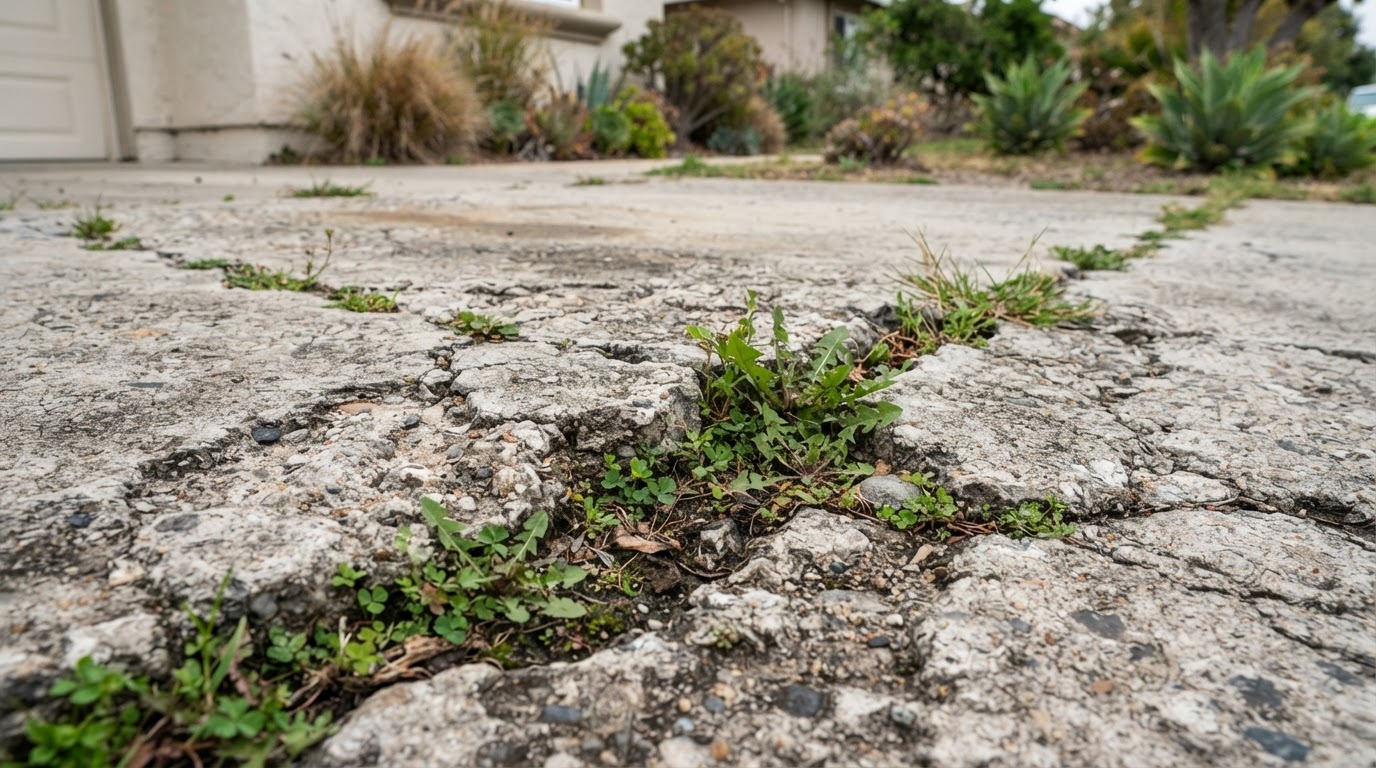
Small, isolated cracks can sometimes be addressed, but widespread cracking, settling, or spalling usually points to replacement. Our guide to signs you need a new concrete driveway helps you tell the difference — and if replacement is the right call, we handle the full concrete removal and replacement.
Curious what a new driveway costs? See how much a concrete driveway costs to plan your budget.