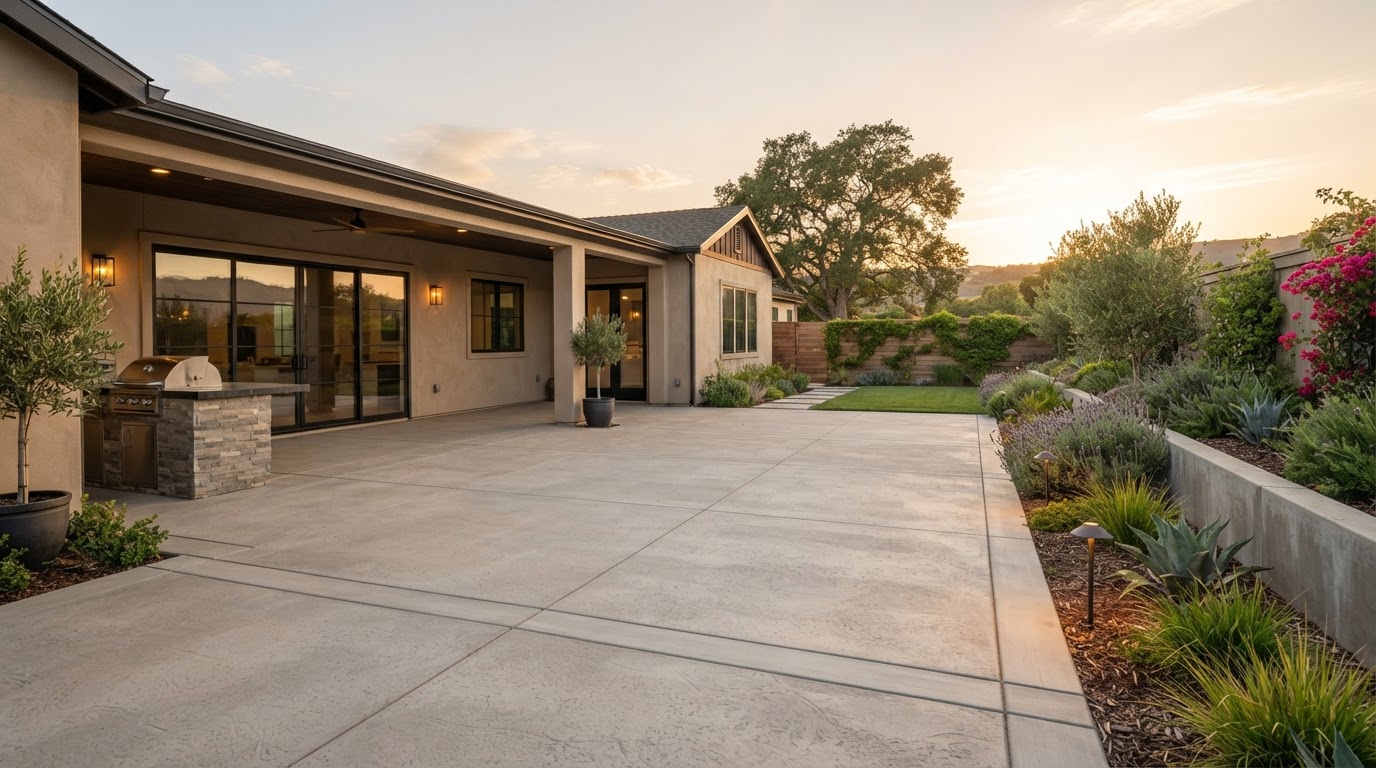
A concrete patio turns unused backyard space into a place to gather, relax, and dine. But like any home project, the cost depends on the specifics — size, layout, finish, and whether you're replacing an existing patio. This guide walks through the factors that shape patio pricing so you can plan with realistic expectations.
What Drives Concrete Patio Cost?
Size and layout
Square footage is the starting point: a larger patio uses more material and labor. A simple rectangular patio is efficient to form and pour, while curved, multi-level, or angular layouts add forming complexity.
Finish
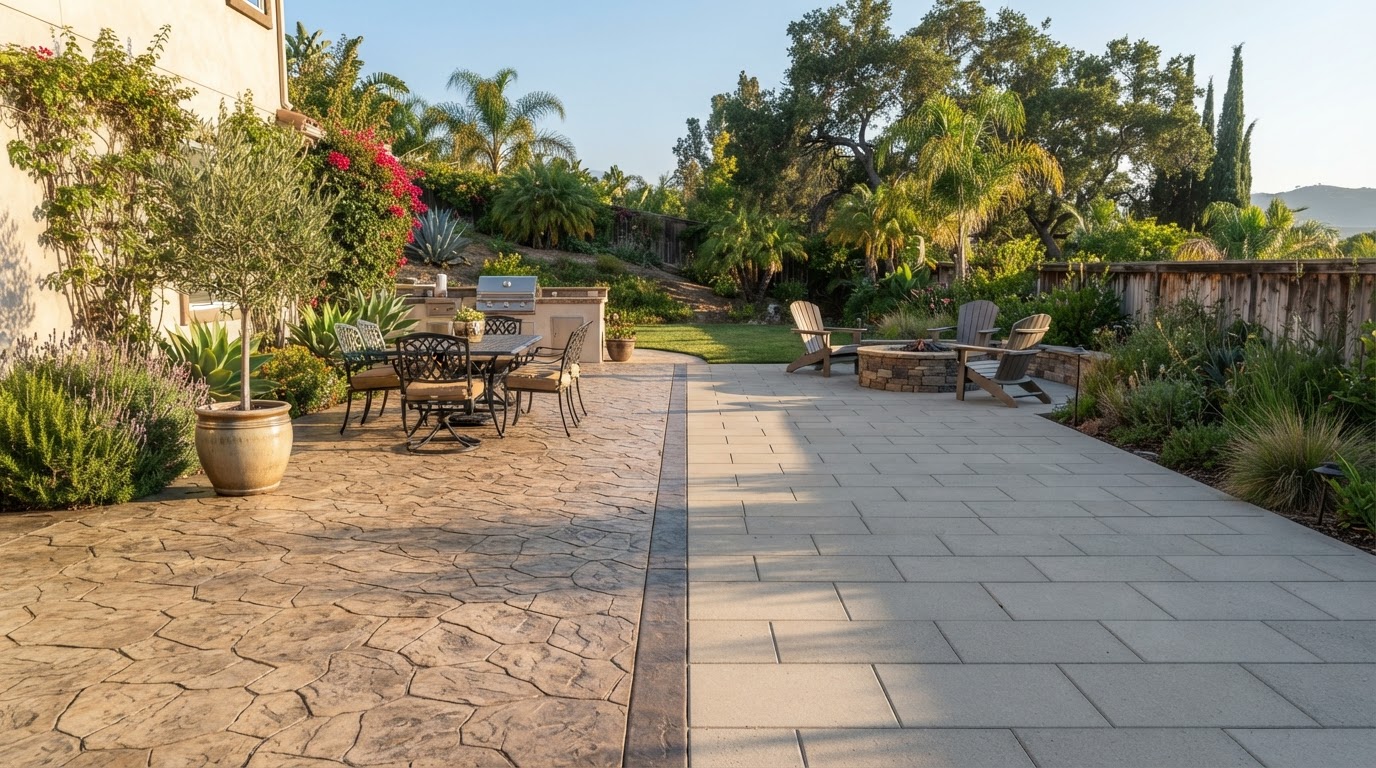
A standard broom finish is the most economical. Decorative options like stamped concrete add texture and character — and add to the price because of the patterns, color, and sealing involved. If you're deciding between decorative options, our stamped concrete vs. pavers comparison can help.
Site preparation
The ground beneath the patio has to be excavated, graded, and compacted to a proper base. Sloped yards, poor soil, or extensive clearing add preparation work. Drainage grading is part of the prep so the finished patio sheds water correctly.
New vs. replacement
Replacing an old patio costs more than building on cleared ground because the existing concrete must be removed and hauled away first. The benefit is that the new patio can be re-planned for better size, layout, and drainage.
How to Plan a Patio Budget
- Estimate the rough area you want covered to gauge square footage.
- Decide whether you want a plain broom finish or a decorative stamped finish.
- Consider how the patio connects to walkways, the home, and landscaping.
- Note whether you're replacing an existing patio or building new.
- Get a free, project-specific estimate rather than relying on a generic number.
Is a Bigger Patio Worth It?
Larger patios cost more in total, but the per-square-foot rate can be a bit more efficient on larger, simpler layouts because the setup work is spread across more area. The real question is how you'll use the space — a patio that's too small gets cramped quickly, while an oversized one eats up yard you might want for other uses.
Connecting the Patio to the Rest of the Yard
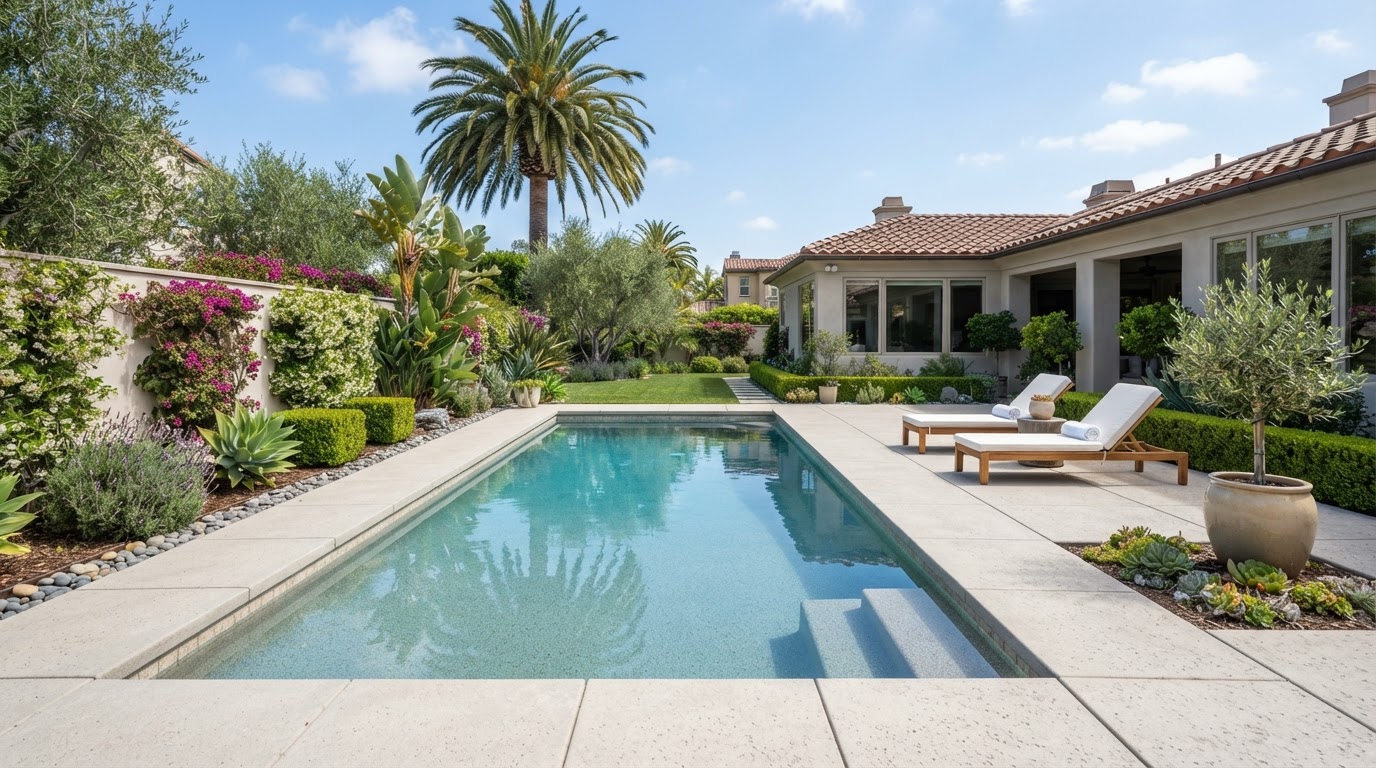
A patio rarely exists in isolation. It often connects to walkways, a pool deck, or other outdoor improvements. Planning those connections together — rather than one at a time — usually produces a more cohesive, usable result.
Ready to plan yours? and Vista Bay Concrete will review your yard, layout ideas, and finish options.